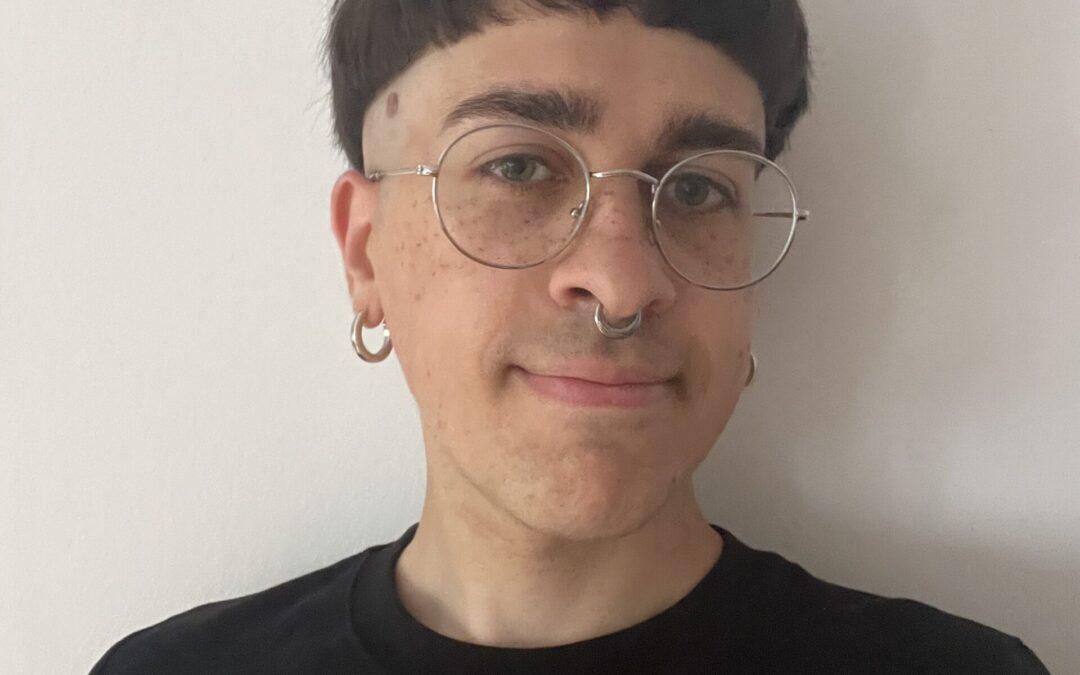
This time we bring you an interview with Ombre Tarragnat, Doctor in Philosophy from the École des Hautes Études en Sciences Sociales affiliated with the Centre de Recherches sur les Arts et le Langage. Their research articulates neurodivergence (autism) and animality from a critical perspective. It was conducted by our colleague Sheila Vidal Ferreiro in English; you can find the Spanish translation AT THIS LINK.
AVA: So, first if you’d like to tell us a little bit about yourself, like, what you have studied and what your main lines of research are?
Ombre: Sure, so I have a pretty multidisciplinary background, I would say. I did a little bit of political science and psychology, but mostly I was trained in philosophy and gender studies. Currently my research focuses mainly on the intersection of neurodiversity and animality, specifically autism. In terms of research fields, I guess you could say that my work is positioned within critical neurodiversity studies, critical animal studies and feminist posthumanism. And these fields of study don’t really exist in France, whether that is animal studies or neurodiversity, so I guess my perspective is always coloured by these new perspectives that come from the Anglo-Saxon world and, at the same time, by the more traditional philosophy and gender studies training that I received in France.
And in terms of my lines of research, I guess my interest in this intersection came from becoming vegan in 2017 with my sister. We did a little bit of activism in movements like Anonymous for the Voiceless and Vegan Impact. And so, of course, now I have some reservations today about the way that this activism was conceptualized at the time, but it was very instructive, and… yeah, it was great. Have you done activist work in these movements as well?
AVA: Hmm… I’ve been a volunteer in an animal sanctuary a few years ago. Other than that, I’ve been more in the academic world.
Ombre: Yeah, kind of the same. But I love sanctuaries, they’re great.
AVA: Hahaha. Ok, so today we are going to focus on one or your articles even though you have a few. So we are going to focus on the one that’s called «Biodiversity, Neurodiversity, Ethodiversity». My first question is: why do you think it is necessary to address neurodivergence from a more-than-human and more-than-neurotypical or neurological point of view?
Ombre: Yeah. Thank you for the question. Maybe I guess, just for clarity, it might be useful to go back to this concept of the «more-than», where it comes from and what it means. It’s a concept that has been developed mostly in academic circles, I haven’t really seen it in activist movements, but in the environmental humanities it’s been pretty present. I’m thinking of people like Erin Manning, whose work spans autism studies but also what she calls, and what some people call, the more-than-human. This movement of the «more-than», and often there’s a hyphen there, is a way to signal a radical expansion of traditional categories. It’s a way of deconstructing the idea of the human as a bounded, autonomous individual. And so, when I speak of a more-than-human turn, it’s a way of recognizing that the way that we exist as humans is not only human. It’s a way of saying: «you’re human», sure. Okay, you can say that. But then you have microbes in your guts that help you digest, and then it’s the air that you breathe, it’s the plants, or for some people, the animals that you eat to survive, so it’s a way of recognizing the entanglement and the relationality of the human and the non-human worlds.
And so maybe now we can take a step further: when it comes to neurodiversity, my intention with talking about the more-than-human turn is to say that there’s no valid reason to be anthropocentric, basically, when you talk about neurodiversity. I think we’ll talk about it more in depth in a minute, but at a very basic level, if you consider that neurodiversity refers to neurological diversity, namely the diversity of all neurologies or nervous systems, then, because most animal species have nervous systems, then it doesn’t really make sense to exclude them. So it’s a matter of coherence. But it’s also something that has consequences for the lives of non-human animals. So it’s an ontological question, but then, of course, it’s also political.
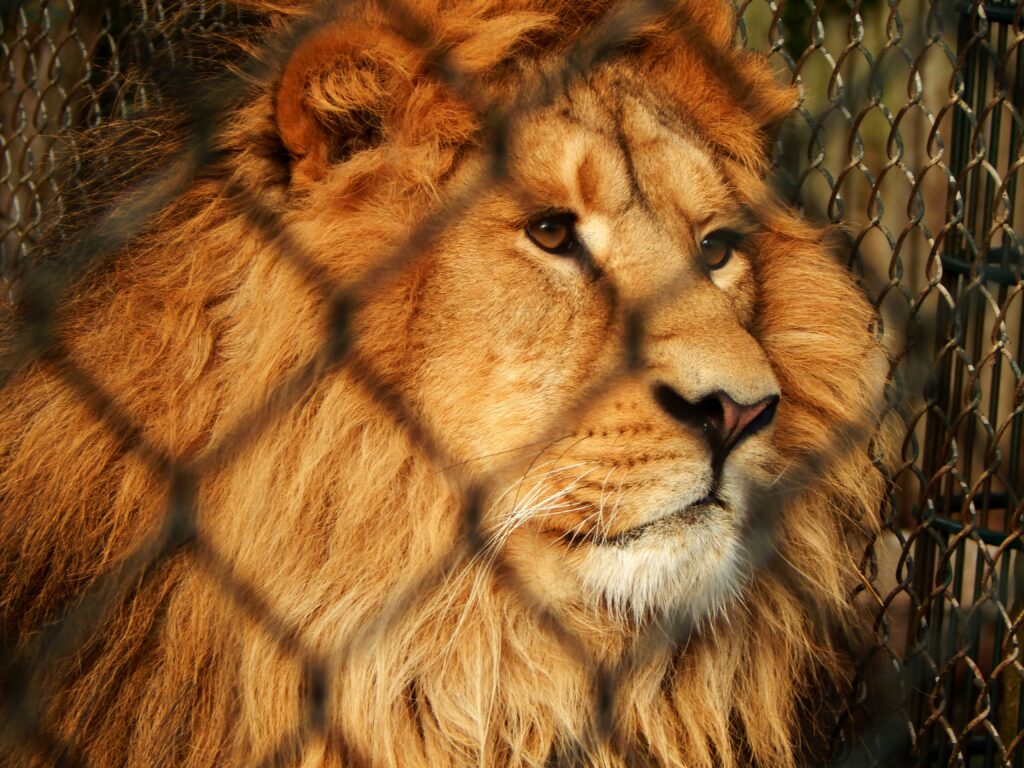
Image: Emily Richards (unsplash)
And when it comes to the more-than-neurological, it’s a slightly more complex discussion, so maybe it needs a longer explanation, but please tell me if I’m going too fast hahaha.
So historically the neurodiversity movement was born out of what we could call a neurological turn in the sciences. The sciences, and especially psychology, were not always so focused on brains, particularly when you take the example of autism. You had psychoanalysts who believed that autism was the result of bad parenting, so they would blame mothers (sometimes it was all parents, but most often it was mothers) for an education that was too cold, or for a relationship with the children that was not affective enough. That’s what they believed, of course it wasn’t true, but for them autism was the result of this sort of affective disorder.
And then you had behaviorists who believed that you could force autistic people to perform or to behave neurotypically by imposing some sorts of conversion therapies, basically. For both of these approaches, autism was considered as having a social or environmental origin.
And so, of course, when you have the neurosciences that come up and say things like: «well, no, actually it’s all in your brain, and so that’s something you’re born with», then it’s easier to be like «oh, but that’s just who I am, so my brain is just wired that way and so you shouldn’t blame me». It’s a bit like the «born this way» narrative in queer movements.
And so perhaps at first it was politically useful to rely on neurology, but I’m getting the sense that it’s not so useful anymore, and that it’s actually causing problems now. And that will take us to animality in a minute, so again, bear with me hahaha.
This sort of neurological discourse in the neurodiversity movement is very tied to politics; it’s way more than a metaphor. Maybe to take one example, I don’t know if you’ve heard about nervous system regulation. We hear about this a lot now, including on social media, and here I’m drawing on the work of a co-author of mine from the University of Helsinki, whose name is Riina Hannula. They’ve worked on the way that nervous system regulation is pushed upon neurodivergent people as this sort of biopolitical tool for asking individuals to become responsible for their nervous systems.
So it’s a very neoliberal, very depoliticizing, and individualizing perspective that ultimately says «no, actually, maybe you shouldn’t blame society for being neuronormative». Neuronormativity refers to the social norms that regulate how we should function socially, how we should use our nervous systems, how we should think and perceive and pay attention to things.
And so this neurological discourse is really mired, I think, in essentialism, in the sense that your brain is starting to become something that defines your essence. And it’s also reductive, so we could talk of neuroreductionism: this kind of discourse reduces all the scope of life and of your existence to the brain or to the neurological. And I think that’s very reductive because there are other aspects of life: there’s cognition, there’s affectivity, there’s embodiment. There are so many things, and so to reduce yourself to the neurological and particularly to physics and chemistry, I feel like it’s a problem.
This also leads to forms of identity politics, because in the neurodiversity movements we have more and more concepts that refer to neurology as the foundation of political subjectivity. So it’s kind of like «oh, you have this type of brain» —which they call that «neurotype»—so you have this kind of neurotype that maybe is autistic or ADHD or Tourettic or down syndrome or anything, and that becomes the basis for identifying yourself, for building kinship and solidarity with others. So it’s like saying: «oh, we have the same kind of brain, so maybe we can, you know, get along», which is really essentialising in a way.
I think for me that’s a problem, because when you’re neurotypical, you don’t have to think of yourself as someone who is embrained or as neuro-anything, and most people don’t think of themselves like that. But then when you keep creating concepts that start with neuro-, like «neuroqueer», «neurokinship», «neuro-whatever» … then it sort of pushes the responsibility of neurological discourse upon neurodivergent movements. And so it’s no longer something emancipatory. It becomes to feel like a burden.
So maybe just to go back to the more-than here—and then we can move on, because this is not the main focus for us hahaha—there’s a lot of people already in the neurodiversity movement who are saying that neuro is a bit reductive. So, for Nick Walker, for example, neuro doesn’t only mean the brain, but the nervous system at large, or maybe neurocognition. So you had neurology and cognition that were separate, and now they have come together, so it’s already something more-than-neurological.
But for people like Walker, the «neuro» is also encompassing spirituality and embodiment and many other things.So it’s expansive, it’s a decentring, but also I think maybe this is a problem because then you’re allowing the «neuro» to engulf all the dimensions of life, and actually our animality: our sentience, our sensitivity, our embodiment, etc. And all of that is subsumed or brought back under the umbrella of the neuro, under physics and chemistry. And of course, when you go back to the earlier traditions of philosophy in Europe, you had a mechanistic strand of thought which—already in Descartes—said that animals were machines, and so you could bring them back to a purely physico-chemical understanding.
And I think when people nowadays say things like, «my brain is just wired that way», or maybe «I wanted to do my homework, but my autistic brain wouldn’t let me», I get a sense that we’re not allowing our animality to be expressed, and I feel like it’s very reductive and mechanistic. It reproduces a tradition that is not only dehumanizing but maybe also de-animalizing.
So that’s a problem for me, and I hope now it’s clearer how the more-than-human is very entangled and tied up with the more-than-neurological for me. I’m not saying we should stop talking about neurons or brains or whatever, but maybe we have to do it in a way that is more expansive. And maybe we have to find new modes of figuration that are not just neuro-based. Here I feel like animal studies and multispecies studies have a lot to tell us about what it’s like to be an animal, whether human or non-human, and that is not reducible to the neurologies that we have. It’s also the worlds that we inhabit and our ways of feeling, sensing and moving.
Yeah, that would be it. Sorry, that was super long…
AVA: No, no, I love a really good explanation hahaha. So, and correct me if I’m wrong, then you believe that neurodivergence would be like mixing the more biological concept and more like, I don’t know if I should say behavioral, but how maybe the social affects people, like physically and psychologically, and in any type of way.
Ombre: Absolutely, and I think it’s interesting that in the history of the neurodiversity movement, the very definition, the very concept of neurodiversity already contains these two layers: first, you had this neuro thing, which is often paired with biodiversity.
Judy Singer—a sociologist, just like you—defined neurodiversity as the infinite variability of nervous systems in the human species. She called it a «subset of biodiversity».
It’s always this biodiversity metaphor that is very biological, very «natural», and that supposedly should include animals, but for her it doesn’t. And that’s weird, because you have this concept of nature that strangely excludes nonhuman animals.
And that’s where the social comes into play. The neurodiversity movement has also been conceptualized, on the other hand, as an heir to the civil rights movement. Often the politics of the neurodiversity movement are conceived in terms of human rights, or within a sort of humanist political grammar where you have individual rights and responsibilities… but this never includes animals.
I think it’s interesting that there is this gap between the natural and the social here, but not any kind of social. For Singer, as a pioneering thinker, the social looks very humanistic, very anthropocentric, and at the same time it is very dualistic. You have nature, which includes animals, but not when it comes to the neuro. When it comes to neurodiversity, she’s like: «biodiversity includes animals, so we can leave them there», and so they to be preserved by biodiversity politics. Neurodivergent politics only try to obtain rights for humans. So there really is a gap between nature and culture, between science and politics.
My goal, really, is to say that science—particularly biology—is already social, as you said, it is already political. And maybe the politics that we chose were very anthropocentric, so they sort of denied their own interspecies dimension.
I think that if we adopt a more posthumanist approach, then we can bridge the gap between the social and the natural and understand that perhaps neurodiversity should not exclude animals, as I said before. If we return to the neurological question, then most animal species have nervous systems, so we should probably include them. But even if you look beyond neurology, and if you choose other criteria like sentience, again, you would end up including most animals.
I don’t know if that answers your question.
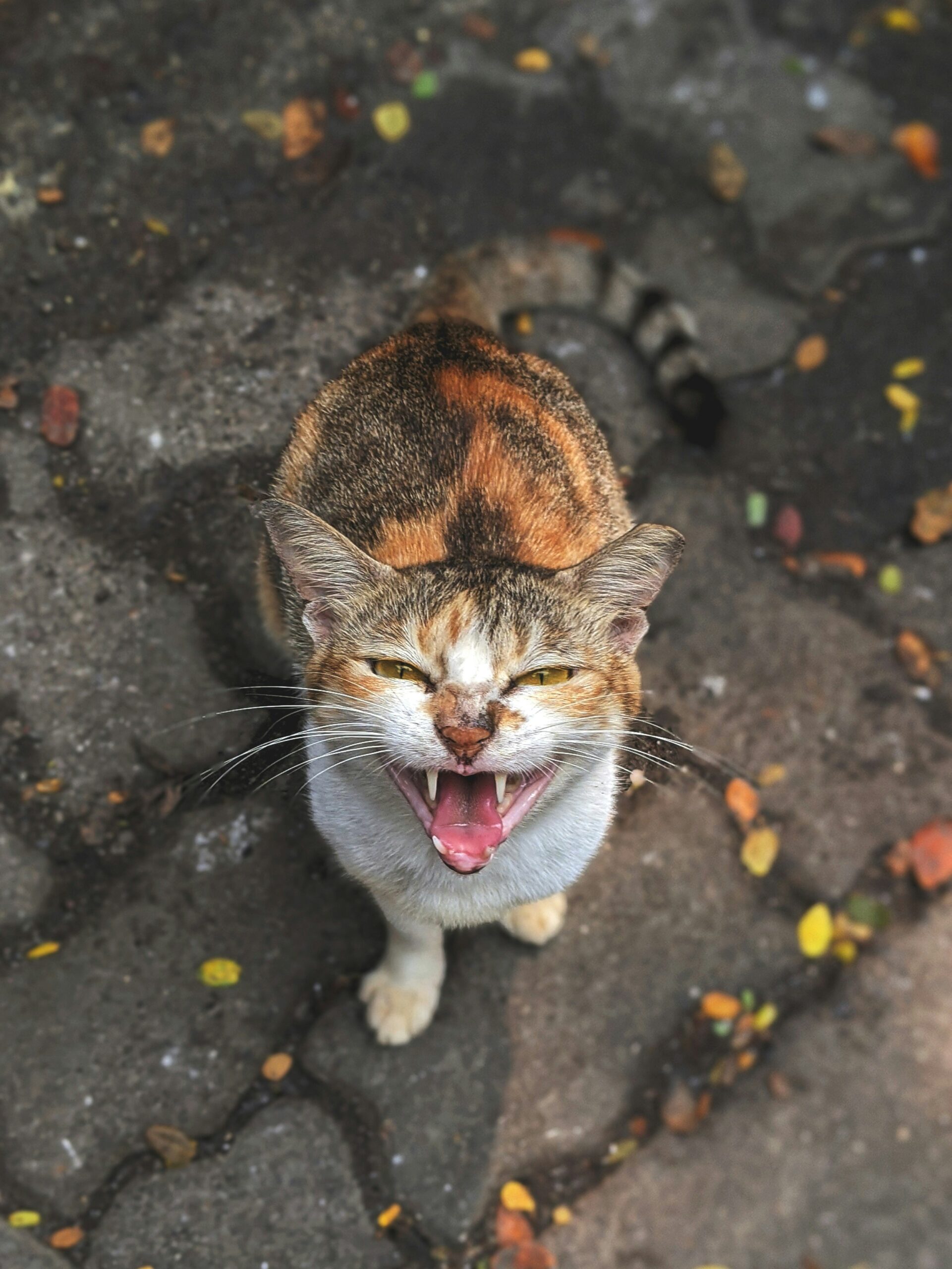
Image: Farzan Lelinwalla (unsplash)
AVA: Yes hahaha. Honestly, I’m a quite interested in what it could imply for non-human animals to widen this concept and to include them both in neurodivergence and, I believe, in neurotypicality as well.
Ombre: Yeah, that’s a really good question. If you listen to someone like Daniel Salomon, he would probably argue that no non-human animal can ever be neurotypical, because for him the neurotypical is a human concept and a humanist ideal. So it wouldn’t include animals.
But at the same time I would suggest that if you maintain the neurotypical/neurodivergent binary, then there is no reason not to at least consider that some animals might be neurotypical, as you said, while some might be neurodivergent.
And because animals have been so excluded from the neurodiversity movement, I think there is still a long way to go before we understand how our concepts might include other animals. And so maybe I can give an example or two of how the concept of animal neurodivergence has been addressed and what implications this has, as you said.
AVA: Please, go ahead hahaha.
Ombre: Great hahaha. So I think I would identify two trends here. Maybe the first would be what is known as animal psychiatry (or veterinary psychiatry), a field in which it is usually recognized that non-human animals can experience non-typical psychological states.
In the language of animal psychiatrists, these experiences are often understood as mental disorders; so they do the same thing with animals as they do with humans: they pathologize. Of course, they’re not going to speak of neurodivergence, because neurodivergence is a socio-political concept and not a medical concept.
But at the same time they’re also not speaking of autism or ADHD directly. It looks like they are uncomfortable with saying that maybe a non-human animal could be autistic. That’s interesting because, why couldn’t they be? Why would that not be possible, or at least conceivable? So they will use concepts like «ASD-like» or «ADHD-like»… For them, it’s like autism, it’s like ADHD, but it’s not the real thing.
Or sometimes they’ll use new diagnoses like HSHA, which is short for «hypersensitive-hyperactive». When you look at the «symptoms» that they describe within this diagnosis, you find that most of them are similar to ADHD and autistic traits, but only adapted to the specific behaviors that you would find in cats or dogs. This might look like saying: «Usually, it’s not hard for cats to fall. They always get back on their feet. But, when they have this condition, they might be clumsier». So the diagnoses are similar, but their names are different.
Then, at the other side of the spectrum, you find people in the neurodiversity movement who use phrases like «all cats are autistic, all dogs have ADHD». I don’t know if you’ve heard of that before?
AVA: Yes, I have hahaha.
Ombre: Yeah hahaha. I find it quite funny because it’s often said half-jokingly or with irony, but I also think there’s a reason why that phrase is repeated so often. I guess for a lot of autistic people, like me, or for ADHD people, there really is a sense of connection with cats and dogs. That doesn’t necessarily mean that it’s a neurological thing, or that they’re actually autistic or ADHD.
So I think it’s important that we don’t leave the field of animal neurodivergence entirely in the hands of psychiatry, because then they’ll turn it into something pathological. And it will end up being just as problematic as it is in humans.
I think it would be useful to engage more with the scientific literature and try to understand what it might mean—or not mean—to be autistic, Tourettic, to have ADHD, depression or anxiety when you are not human, when you are an animal. But at the same time, there are very political implications, because imposing human concepts on animals who haven’t asked for any of this—and who likely don’t care whether they are autistic or have ADHD—can also be problematic.
I think these discussions deserve more complexity and to be more nuanced, and I feel that this is still lacking in the neurodiversity movement. So I really hope we get there and engage more deeply with all these implications.
Another issue—which perhaps we can discuss later—is that, precisely because neurodivergence has remained so under-recognized in non-human animals and within the neurodiversity movement, I believe there is a speciesism that has not yet been challenged. And that made me wonder whether there are also speciesist logics at work within neuronormativity. Because, if we’re going to have a political movement that is very humanist, very speciesist, or very anthropocentric, that probably means we want to reaffirm our humanity. And we often do that because we don’t want to embrace our animality.
So I suppose another implication would be… that there might be neurodivergent animals, but also that we, as neurodivergent people— and as humans in general— are also animals. And what does that mean? What are the implications for a population that is already dehumanized, that is already animalized? What would it look like to reclaim our animality specifically from the standpoint of being neurodivergent? I’m also very interested in that.
AVA: I agree with you. I think trying to re-analyze everything from an antispeciesist point of view would have implications for both non-human animals and humans. It’s a lot of rethinking about our own concepts about ourselves and the rest of species and how we interact…
Ombre: Right? I think it’s so interesting, and I’m glad you agree with this, because I feel like often in antispeciesist movements there’s often a tendency to always put «animals first», which is important, because there are very serious matters of life and death at stake. But if you do that without realizing that we are animals too, then antispeciesism itself doesn’t really hold up. I don’t know, I think it’s important that we do both.
Image: Artem Beliaikin (unsplash)
AVA: Yeah, I agree.
I don’t know if I’m going like way too ahead of the conversation, but I’m honestly intrigued by your concept of well, it’s not exactly yours, but the concept of ethodiversity that you use. I don’t know if it’s more related to behaviour or… What is it? What is it about?
Ombre: Yes, of course. So it is related to behavior, but I guess I really want to make it clear from the beginning that I’m not using behavior in the same way as behaviorism did.
I mentioned behaviorism very briefly earlier, but maybe for those unfamiliar with this scientific approach: it is a school of thought that believes that behavior can only be approached from the surface, from the outside, and therefore it really denies subjectivity. And, of course, that is not how I understand it.
Perhaps I can start with ethology, which is the science of behavior. At first, it was developed from the study of non-human animals, but it has also been applied to humans.
I guess my proposal is to move from neurology as a central metaphor to ethology, because, first of all, it is a way of focusing on animality, of focusing on animals—and here I’m thinking of non-human animals—but it’s also a way of being more expansive and imagining new modes of figuration beyond the neuro.
As you said, I didn’t invent the concept of ethodiversity; it comes from conservation biology. So, once again, we return to this tradition of thinking about biodiversity. It was a researcher—a Spanish one, in fact—who came up with the idea that biodiversity also includes behavioral diversity. And that includes mating rituals, migratory patterns, whether you live at night or day, the type of diet you follow… So it could also include whether you follow a plant-based diet.
But I think what interested me was reformulating the concept. In fact, I came up with the term without knowing it already existed, and when I discovered that it did, I was very interested. It didn’t have exactly the same meaning that I give it, but still it’s great that it comes from a tradition also related to neurodiversity, in the sense that it also engages with biodiversity.
From my perspective, ethodiversity is basically the diversity of ways of being in the world. It encompasses the ways in which we engae with the world: our affectivity, our embodiment, our somaticity; and of course, cognition too… it is all these things at once.
I think what interested me in exploring this concept was establishing a connection with neurodiversity—which includes autism, ADHD, and all other neurotypes, so to speak—and expanding on it to say: «These are not just neurologies; these are ethologies».
Maybe another important clarification here is that, although I’m using the concept of behavior, and even though I reclaim ethology, I am not referring to classical ethology, which was also very speciesist in many ways. I am referring instead to philosophical ethology, to the field of critical ethology, or to what I call «queer ethologies». So it is something much more expansive, a way of including how our relationships with other animals and with the environment also shape us and reconfigure our behaviors and our ways of being in the world.
It is ultimately a way of decentring the human and proposing a more-than-human turn in neurodiversity studies. Of course, there’s another important aspect for me: emphasizing the entanglement of speciesism and neuronormativity. I don’t know if it’s going too far to get into this already.
AVA: Tell me, go ahead hahaha.
Ombre: Okay hahaha. So what I mean by that is to acknowledge that neurotypicality—not just the fact of being neurotypical, but as a social structure that favours typicality—already constitutes a form of oppression or a social structure of power rooted in speciesism.
The evidence I find for that is that, when I read, for example, the doctoral thesis by neurodivergent philosopher Robert Chapman, I see that they show how the notion of neurotypicality relies on a concept of species typicality. That is the idea that each species has one single «normal» way of being and functioning, and that all other ways of being and functioning are pathological, abnormal, or simply wrong.
Chapman doesn’t actually go so far as to say: «Well, this is speciesism; it’s expecting animals to conform to our expectations of how their species should look or behave like». They don’t really go that far. But that is, in a way, what they evidence.
And I wanted to point out that, if we assume that every species has only one «normal» way of existing, then we are imposing very reductionist expectations. And that applies for other species as well.
So this is, in a way, one of the roots of anthropocentrism: the idea that we are going to focus on a very typical kind of human—a human who behaves «normally», who thinks «normally», who is interested in the «right» things… And this concept of species, which lies at the root of neurotypicality, is also deeply rooted in speciesism itself.
That is why, for me, these are very entangled systems of oppression. And I’m not sure that, when we insist on the neuro so much, we are really capable of focusing on this or recognizing it. So, when I propose this framework of ethodiversity—which for me is not just a concept, but a broader approach—it’s also a way of saying that there are always ways of being that are governed by what I call «ethonormativity».
So, when I replace or perhaps add ethonormativity to neuronormativity, my intention is to show how we have very limiting expectations about what a species should be like. For example, you might expect a cat to be very docile and calm, and to enjoy being petted. But perhaps your cat is afraid, or perhaps they’re hypersensitive and don’t want to be touched; so they might bite you, scratch you or meow very loudly.
And when that happens, we react by saying: «Ah, well, I don’t want a cat like that, so I can abandon them, or kill them, or euthanize them». And then, when a horse resists being ridden, we think: «Well, that’s not how a horse should behave», and so once again we consider putting them down or sending them to the slaughterhouse.
To me, this is ethonormativity. And it might not sound very related to neurodivergence, but when you take neurodivergence or neurodiversity out of a purely identity-based paradigm, then perhaps neurodivergences or neurotypes are also simply ways of being that are not typical within our species and which are also frowned upon by this behavioral normativity.
I don’t know if this is convincing to people, or if this will actually work, but it’s a kind of humble attempt to say: «We should talk about the speciesist roots of neuronormativity».

Image: Mateusz Zatorski (unsplash)
AVA: I think I agree with you on basically everything. Now, my struggle when I think outside of the box is that I, there are no limits hahaha.
For example, you were saying before that neurodivergence is not only related to biology or genes or stuff like that, but that it could also be related to the social. For example, complex PTSD is basically like someone gets deeply affected by negative life experiences and things like that. Your neurons get affected, or your behavior, or things like that, then…
So I guess my question is: what determines what’s normal and what is not? As we are all different, what would be the common denominator?
Ombre: Yeah, that’s such a good question. I think it’s a very tricky question, so it’s good that you asked it, and I’m not sure I have a full answer. I think I have opinions that I can share, but also I’m still in the process of discussing that with colleagues and other people.
Of course, in the first place, typicality and divergence are statistical positions. So it’s like we take a sort of… I’m not a math person, but from what I understand, you sort of make a distribution, and then you say: «well, this is the majority», and then you draw limits. Then at some point you’re too far from the mean, and so you’re not typical.
This shows that the statistical positions are turned into politics or political difference in political norms in the era of modernity-coloniality in the West. When you go too far from the majority, of course, you’re diverging from the norm, and this divergence is often met with social violence.
I think for me it’s useful to have a concept that speaks of this divergence, and I know not everybody agrees. Some people, like Erin Manning, would argue that when you define yourself against the norm, you’re still speaking about it, and therefore you’re still somehow reproducing it. So she would refuse, for example, speaking of neurodivergence, or saying that someone is neurodivergent. She would say that they’re «neurodiverse», because for her, «diverse» is expansive and open; it’s a way of resisting the norm without naming it.
I still think – and that’s my position at the moment and maybe it will change – that naming the problem and the structures that create the norms is already a form of political work, so when I say I’m neurodivergent or ethodivergent, it’s not about saying that it’s natural, given, or obvious. It’s not, of course; the normal, neurotypical, or ethotypical is always a made-up category, a conceptual gesture, and it only makes sense in relation to a specific norm that is geographically and historically situated.
I think for me, where I draw the line is to say that you become ethodivergent or neurodivergent when your ways of being and behaving are different from the typical behaviors that are found in your species, in your environment, in the norms of the place they reside in.
I would also add that in my perspective, and I’m curious to know what you think, I would say that you’d have to be impacted on the long term in your subjectivity to speak of ethodivergence. So as you said, CPTSD might happen from an event that is very brief but it changes you, maybe not forever, but in the long term.
For example, say I decide to behave a bit strangely today, so I make weird faces or noises in public. And then, say I’m lucky enough that this doesn’t cost me my freedom, maybe because I’m white. Then my weirdness that day doesn’t have to become a part of who I am as a person, I can just be weird today, and then tomorrow I might act in ways that are more typical, or more socially expected.
I think that maybe what makes someone neurodivergent as a political category – maybe not in the biological sense, because again it’s difficult to determine, as you said – but in a political sense, I would probably limit the category to when it really affects your subjectivity, when it transforms you, or defines you in the long term.
I know it’s a bit arbitrary, but I guess for me it’s also worth making sure that the concepts that we use in the movement and beyond are not too easily reclaimed by capitalism, because neoliberalism assimilate difference by neutralizing its political charge. They might say «oh, well, everyone is a bit different now», and people say that «everyone is a bit autistic», or «we’re all a bit different», «we’re all a little bit quirky», and so it doesn’t always function as a political category anymore. If you take this concept in a way that is so expansive, you lost part of its potency.
So, first I’m curious about what you think about this, but I’m also to know what word you use in Spain to say «neurodivergence», because where I come from, in France, people often say «neuro-atypical». I don’t know if you’ve seen the series on Netflix, Atypical, but the term «atypical» has become completely captured and «neurowashed» by neoliberalism: it’s almost become quirky or trendy to be atypical.
So when it comes to where to draw the line, I think we have to draw it somewhere that is not so easily reclaimed, because otherwise, you know, what political work does it do? But I’m curious to hear what you think.
AVA: I agree, and I’m honestly excited about this definition, because I think it’s not like… like this kind of definition enables the concept to evolve and change if it’s necessary. It even… like, it’s not just one ethodivergence or neurodivergence, there are multiple ones that could change depending on, as you said, where you live, the time when you live, and I think a really good point of view that can englobe, like a lot of people. I don’t know how to say it, like not strict, maybe.
Ombre: I agree. I completely agree. It’s the same thing with the definition of neurodiversity. There are many ones, but some people try to make it very strict, saying that there’s just one «official» or «authorized» definition. But then you always exclude people when you say, like «it’s this thing, and it’s universal», it’s almost a colonial gesture, so I love what you said, that it’s, it has to be plural, it has to be evolving.
AVA: Thank you so much for bringing this up. I do not think it’s often spoken anywhere, but even less in the antispeciesistt community.
Ombre: Yes, I think it’s cool that these discussions have been taking place for a bit, but yeah, we have to make it more of a common thing to talk about.
AVA: Yes, I agree. Well, thank you so much. I don’t know if you want to add anything else, anything that I missed asking about, or anything you would like to comment on hahaha.
Ombre: Well, just thank you so much for having me. It’s been a pleasure, and I’m very honoured to have been invited to this, and I’m looking forward to seeing your future work with the podcast.
AVA: Thank you. Thank you so much.
Ombre: Thank you.